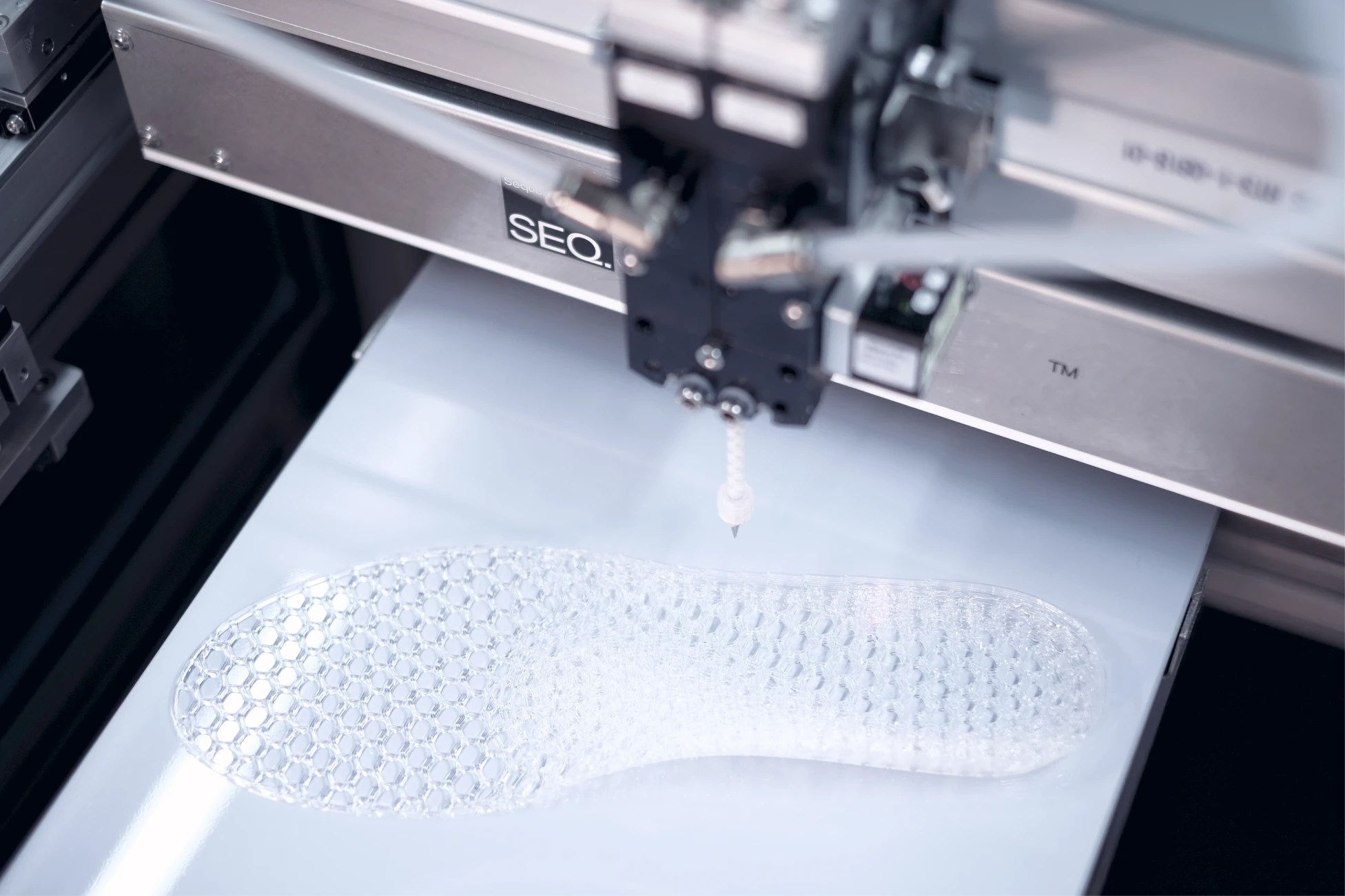
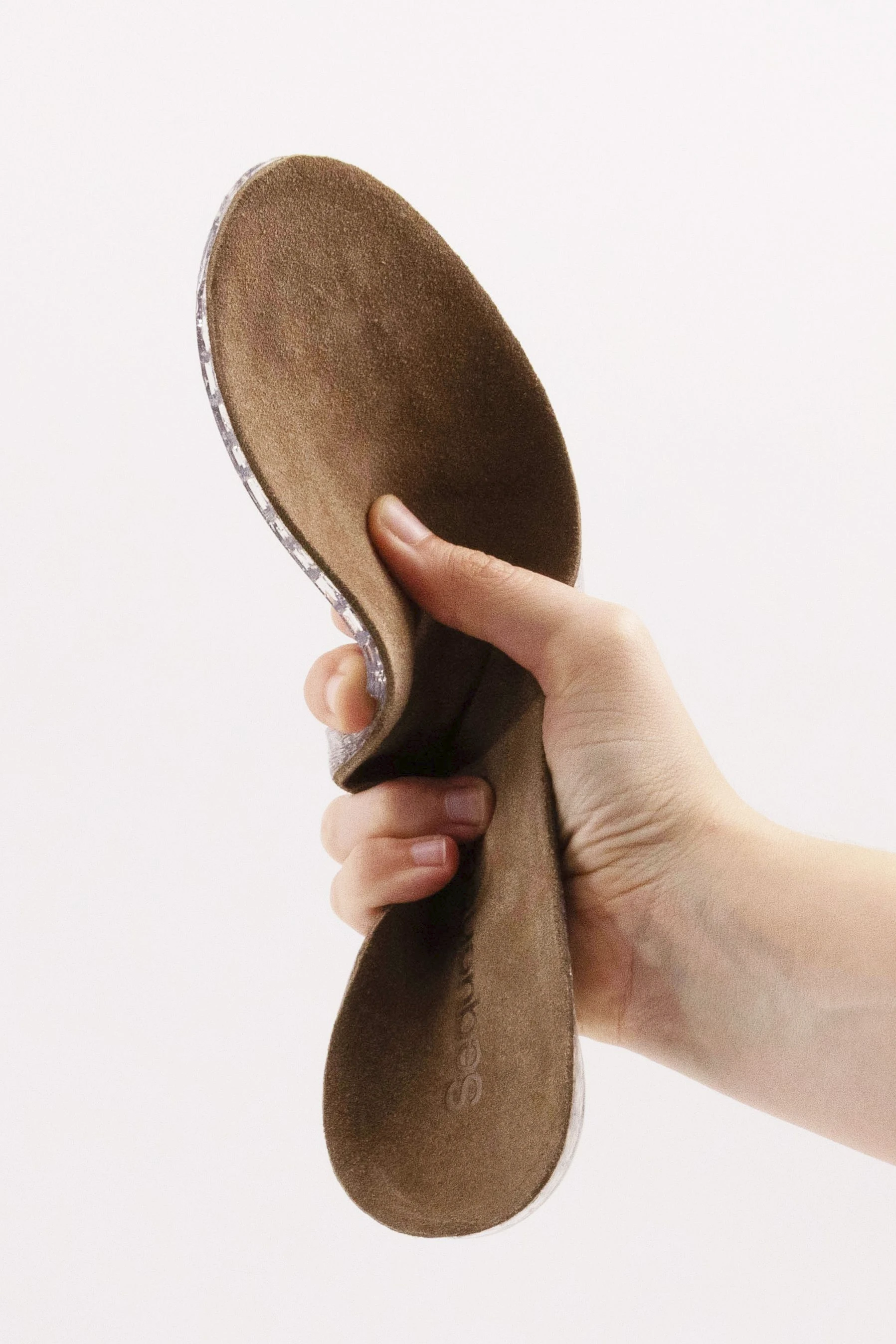
The core problem space for this project exists as a translation layer between human motion data and 3D printer machine code (G-Code.) SideFX Houdini was chosen as a platform for this interface due to a variety of factors including proceduralism, automation capabilities, extensibility, and data handling.




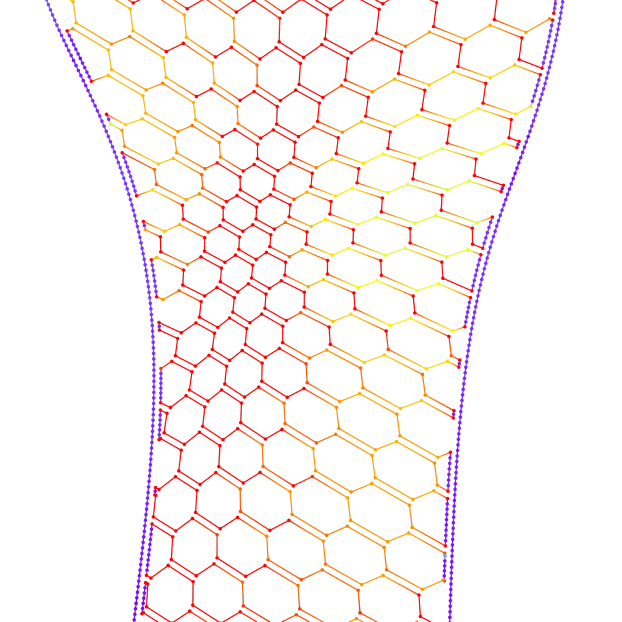
It was necessary to ingest human biomechanics data as spatial scalar fields in order to manipulate the density of the hexagons while maintaining the overall structure of the pattern.
Silicone printing requires high toolpath continuity for printing quality and speed due to the material being a liquid prior to extrusion. Standard slicing software does not provide optimization for these constraints so a custom solution is needed.
A custom solver was built using VEX to generate continuous toolpaths.
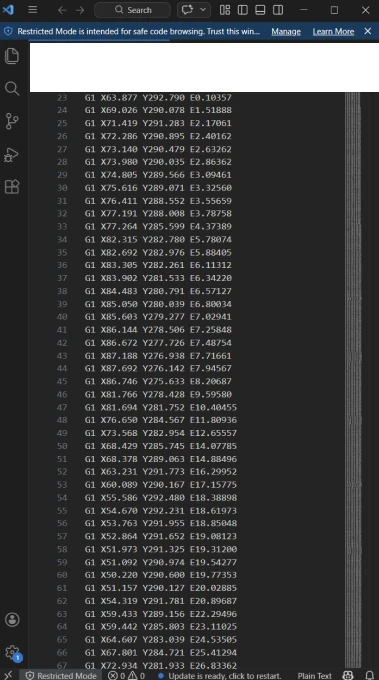
This pipeline eliminates the need to generate 3D CAD geometry and utilize an off-the-shelf 3DP slicer. Traditional slicers do not optimize for silicone printing and do not offer the flexibility and control needed for data-driven gradient infill patterns. A custom python script is used to translate Houdini attributes to G-Code, communicating directly with the printer network.
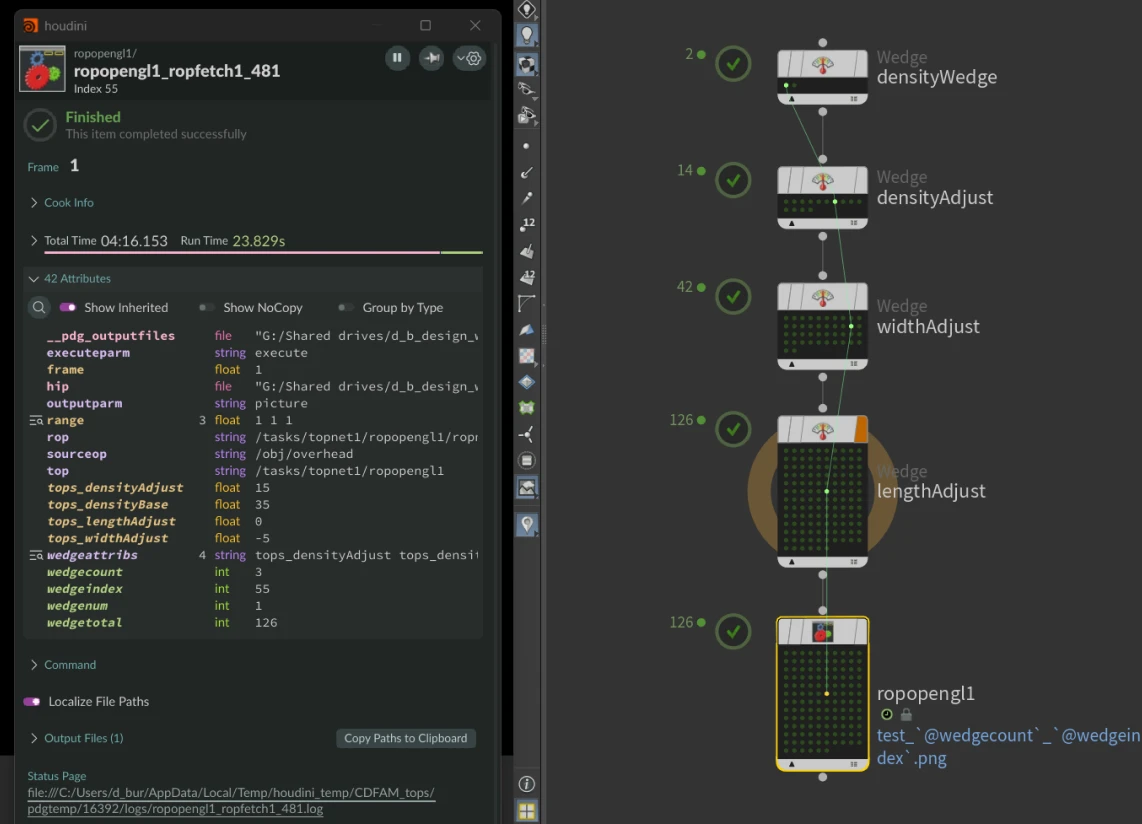
Utilizing Procedural Dependency Graphs (PDGs) along with wedging, the automated generation of a large number of geometries can be initiated from a single Houdini file, exploring and prototyping a wide parameter space.